

New Kids on the Block


When it comes to how children adjust after a major transition (such as a move), school is a major playing field. It is at the centre of their lives, not least because they spend the biggest part of their days there. School also is their main social habitat. It’s where most of their friends come from, at least in the beginning. What happens at school often “spills over” to the rest of their lives. If they feel comfortable and integrated in their new school, that usually helps them do the same in other areas; if they struggle there, it taints their whole experience (not to mention their parents’).
The first day of school for my two older children, or rather their first week, was one of the most stressful times of our move to Switzerland – for me. I was nervous for them. Would they like it? Would the other kids be nice to them? Would they fit in and be accepted? I was most worried about them feeling awkward and lonely.
I still have vivid memories of what going to a new school felt like – from my own moves. Even though I was very young at the time, I distinctly remember the feeling of being the new kid in class, the odd-one-out, all these – thankfully brief – moments in the beginning that I would happily have skipped. I would rather my children did not have to hang out by themselves during break; sit alone at lunch; not have a partner for those first group projects. I would rather they’d skipped those moments, even if they are a necessary part of adjustment; even if they are a rite of passage that will make them stronger and more resilient. Of course, there was absolutely nothing I could have done to spare them that. They had to manage on their own and they did a decent job, as far as I can tell.
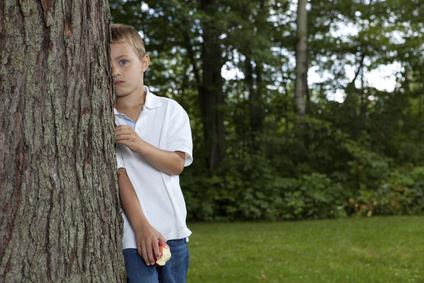
But they have changed in the past few months. My older son has become much more independent and responsible, but also more irritable, short-tempered, stressed and, in his own words, lonelier than he was back in Vienna. My daughter, always bubbly and larger than life, has become more subdued. She spends much more time by herself than she used to. If I didn’t know better, I’d say she’s lost her
spunk.
Most of these changes are subtle. Sometimes they are able to express how they feel, sometimes I have to dig deep to get them to formulate what bothers them. I’m sure some of those changes have to do with them growing up, but isn’t it a strange coincidence that they should all happen now? And, more important, are they just transition pains or are they here to stay?
Were you ever the new kid at school? Did you like it or hate it? How did your kids cope with it?
expat, family

A Move for Two


Moving with your partner sounds like a good deal: you have someone to share the load, handle all the arrangements and manage the logistics with you; and you also have someone who can feel your excitement on the good days and appreciate your frustrations and disappointments on the bad ones.

All that is true, but in fact moving à deux also makes life so much more complicated.

First, not only do you have to deal with your own adjustment issues; you have to worry about your partner as well. How well (or how badly) they are doing affects how you are doing. If they are not happy in the new place, it is unlikely that you will be happy there, hard as you try. Worse, if they are struggling while you are having a much smoother ride, they will be difficult and jealous, if not resentful of you.
Then, especially if things are tough and at least one of you has a hard time adjusting, there may be an issue with who initiated the move. If you were not as eager to move as they were, but decided to follow anyway, you will blame them for everything that goes wrong. You may refuse to adapt and settle. According to surveys, the top reason why international assignments fail – basically people pack up and head back to where they came from – is what they call “partner resistance.” Having been both initiator and follower in different moves, I can tell you that the only way to make it work and avoid resentment building up is if even the follower has a serious incentive to move, like being closer to a family member or a potential future career option. As soon as there is compromise or sacrifice involved, but not some kind of reward, we have a hard time letting go. We are human (at least most of us are!).
 
In addition to all that, when you move to a new place, at least in the beginning, you will be spending a lot of time together. There will be no distractions, no family or friends to act as a buffer, no outlets for when you have enough of each other; it will be just the two of you (ok, maybe you have kids, but I’m talking relationship-wise). Not everyone can handle that under normal circumstances. Add the stress of moving and settling, uncertainty about how your life will be in the new place, job pressures and culture shock – and that’s a lot of pressure. How you go into the move as a couple determines how you come out of it. If you have solid foundations, you will come out stronger; if your relationship was dysfunctional already, you can be sure that any underlying tensions will come to the surface.
So when you least expect it, your relationship is being put to the test. Why am I writing this? Because I think that most of us do not anticipate having to go through such complications when we move. The practical aspects are so overwhelming that we overlook the potential strains on our relationship. We are not prepared to deal with them when they come up. There has to be a better way.
Has moving affected your relationship?


Where’s the “good” in goodbye?


For my first post of 2013, I will steer clear of New-Year’s-resolution-talk (not least because I’m having a hard time with mine) or speculation about what the New Year will bring. One thing that it will predictably bring – like every year – is more goodbyes. Saying goodbye is a process I go through several times a year. I have become quite good at it, but still dread it every single time.
So once again, starting the New Year meant for me, among others, saying goodbye to my hometown, my country, (the sun? J), my family and my friends, old and new. Once more, I wished I didn’t have to go through the torturous procedure, almost invariably the same every time: the tightness in my chest as I leave home converting rapidly into a mild depression during the trip, then two to four days of inconsolable sadness, followed by a gradual healing process that may take one to two weeks, as the routines are re-established and I get so absorbed by the rhythm of my daily life, that it is as if I never left. Even though every time I know that I will be ok in the end – when all that’s left of the sadness is a bittersweet aftertaste of being permanently away from something and someone –I still go through it every time. I wish I didn’t have to, but I also know that is the deal I have made – I and all those others with similar life choices – to live within the cycle of perpetual goodbyes. I’m not complaining.
As I was reading some of last week’s New-Year’s-resolutions-press, something caught my attention. It was the suggestion that, rather than coming up with a list of random resolutions, it makes more sense to think about what matters to me most – who do I want to be, what makes me happy – and make sure I have or do more of that.
One resolution that is always somewhere on my list, ever since I can remember writing them down, is to make a bigger effort to stay in contact with family and friends. Some years I do better and others I do worse; but I keep at it year after year. It is part of who I am and it makes me truly happy.
I want more of that this year as well. More goodbyes, but also more hellos.

Home for Christmas


I have always loved Christmas – the atmosphere, the lights, the smells, the presents, the food (the food, the food…); it’s just that the last few years I got side tracked. I had children and a home of my own and suddenly became responsible not only for my Christmas, but also for that of a few other (mostly little) people – for whom everything had to be perfect. So somehow Christmas progressively transformed from a relaxed and carefree family holiday, to a stressful and hardly enjoyable one. Trying to get everything
right – and on time! – led to a hectic craziness of Christmas shopping, Christmas cards, Christmas decorations and double- (sometimes triple-) booked Christmas events. Every year I promised myself that next year I would do things differently and every year I broke my own promise.
Except this year. This year, we are doing things differently. This year we’re staying home.
We need to. This move gave us the perfect opportunity to stop the madness. The transition to our new life has had its ups and downs. My children are still struggling to find their place here, especially to build a new circle of friends, while they still miss their
friends and their life back in Vienna very much. I can’t do much to help them with that, but what I can do is at least make sure they have a safe place where they can go when things get tough; a refuge. I want to create a little corner where they can be themselves and feel accepted and loved. I want them to feel secure and comfortable there. Creating a home has always been important for me, but the kids have made it essential.
And it’s not just for them. We are far from settled. We all need to find our bearings. But for that, we need to take a deep breath and give ourselves the time to feel at home. The holidays should be the perfect opportunity to do that. Being relatively new to this place helps too. So this Christmas there will be no big plans, no party invitations (obviously, given the current size of our social circle) and no trips. We will stay away from traffic jams, stress and last minute shopping on Christmas Eve. It will be just us, hanging out at home, listening to Christmas songs, decorating the tree, baking cookies and sticking glittery stars on the living room windows. There will be board games and hot chocolate, popcorn and favourite movies, singing and the smell of the beeswax candles on the tree.
Yes, I know it’s cheesy, maybe even a bit boring for some, but it will be just perfect.
expat, home

The Return of the Grumpy


“Attitude is a little thing that makes a big difference.”
Winston Churchill

I am reaching that fragile stage in the foreigner’s journey where the honeymoon is ending and reality starts to sink in. It is the phase where you wake up one morning and realize that you have not seen the sun for weeks, because it is hidden somewhere behind that impenetrable grey curtain; or that getting to the nearest Starbucks for your favourite coffee – the one you need so badly to be able to function in the morning – takes you an hour round-trip, when it used to be just a few minutes’ walk.
For me, the worst part of that phase is disillusionment with the people: realising that not everything is rosy and not everyone is nice. That’s particularly relevant in this move, since so far, with very few exceptions, everything has been rosy and everyone has been nice. We have been treated with extreme friendliness from day one. It is delightful – and almost unreal. The eternal realist in me has been dreading the moment when I recognise that not everyone is on their best behaviour here and that there are grumpy people in Switzerland, too.
In the past few weeks, there have been a couple of incidents – funny enough, all of them on the road and all involving impatient men in large vehicles, who I suspect noticed my gender as well as my foreign license plates – but nothing major yet. The more recent one was this morning and it involved a significant amount of unprovoked unfriendliness. A few months ago, I might have let it taint my beautiful Monday morning, but today I chose not to. I decided that it is time to take matters into my own hands. I have a lovely image of the people here and am not going to let a couple of grumpy
ones spoil that.
We can choose to be unhappy just like we can choose to be happy. We can allow ourselves to complain about everything around us or we can decide to appreciate the positives and tolerate the not-so-positives. At the same time, I believe that we both absorb and reflect friendliness and crankiness; positive and negative energy. I have found it easier to complain and be cranky in some places, while in others I have felt compelled to look for the positive side of things.
I feel that I have been much less grumpy since we moved here, simply because I encounter less grumpiness in my daily interactions. I choose to be nice to people here, even the ones who are not as well disposed towards me as I would have wished them to be. I am more tolerant and patient and more inclined to give people the benefit of the doubt, because I feel grateful that they do the same with me. I choose to be happy here.
Attitude is half the battle, right?